A Seat for Your Bag: The Restaurant Rule I Wish I’d Learned Sooner
There is a moment, usually just after you sit down, when every handbag owner in the UK makes a silent calculation. The table is too small. The chair is too low. The floor looks sticky. And somewhere between ordering a drink and taking off your coat, you have to decide where the bag actually goes.
It sounds trivial until you have watched a good leather bag slide off the back of a pub chair, or found a scuff on the corner of a tote that you are sure was not there before dinner. Here at Marcela’s Purse, we are not here to turn a meal into a performance. The aim is simple: protect the bag, protect your evening, and do it without making everyone at the table wait while you arrange a protective shrine.
The floor is not a neutral choice
The floor is where most bags end up, and it is rarely the innocent option it looks like. In a busy restaurant, the floor collects everything the day has brought in: grit, spilled wine, damp from coats, and the odd crumb that has escaped a Sunday roast. A soft leather bag can pick up a mark in seconds, especially near the base or along the corners.
If you are in a pub with a wooden floor and your bag is a sturdy canvas tote, the floor may be fine for an hour. If it is pale leather, suede, or a bag you have saved for, it is worth a second thought. I have a quiet rule now: if I would not put my coat on that patch of floor, I do not put my bag there either. That does not mean hovering it on my knee all night. It means using the floor as a last resort, not the default.
A small, packable cloth pouch takes up almost no room and can sit under a bag in a pinch. It is not glamorous. It is also the reason my favourite cream shoulder bag survived a rainy November dinner in Soho.
The chair-back is a good idea until it isn’t
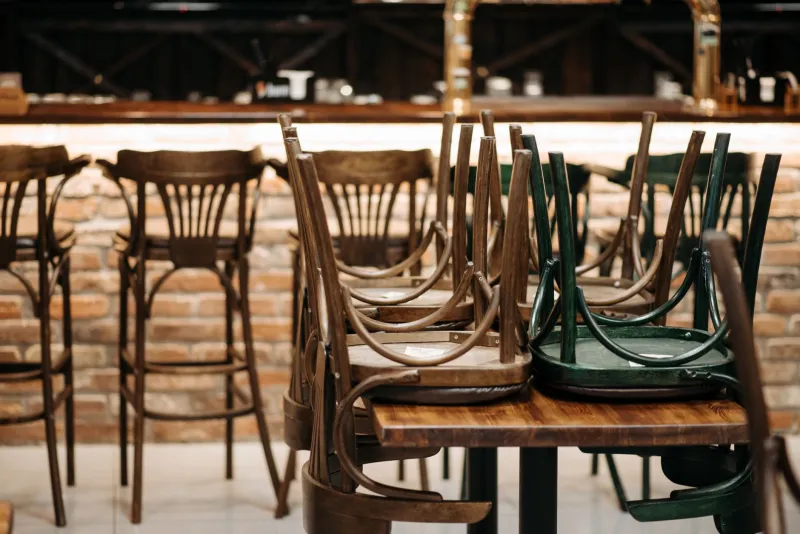
Hanging a bag on the back of a chair looks effortless, and in many restaurants it is perfectly sensible. The trouble is that chair backs are not designed for bags. A narrow slat can stretch a strap. A rounded back can let the bag slide. And in a crowded room, a bag hanging behind you becomes something for other people to bump, brush past, or knock onto the floor.
I still use the chair back, but I do it with a little care. If the bag has a short handle, I loop it over the chair once and let the body sit against the back, not swing free. If the strap is thin or the bag is heavy, I skip it. A crossbody worn across your body during dinner is sometimes the least fussy answer of all, especially in a pub where chairs are packed tight and nobody has room to be elegant about anything.
At a party venue, the chair-back trick is even less reliable. People move. Coats get moved. Someone’s uncle decides to rearrange the seating. Keep the bag closer to you than the chair.
Hooks: use them, but read the room
Under-table hooks are one of the small civilising inventions of the restaurant world. When they are there, use them. They keep the bag off the floor, away from feet, and out of the way of waiters. But not every hook is a good hook. A thin metal hook can leave a dent in a soft strap if the bag is heavy. A hook that is too wide can let a bag slip off.
My approach is to hang lighter bags, and to avoid hanging anything with a delicate chain or a very soft handle for a long stretch. If the hook looks flimsy, I would rather use the chair or keep the bag on my lap. There is no prize for using a hook that does not suit the bag.
Hook etiquette matters too. Do not hang your bag on a hook clearly meant for someone else’s coat. Do not let it dangle into the aisle. And if the table is cramped, a bag hanging by your knees is often less annoying than one propped between two chairs. Good manners and good bag care usually point in the same direction: keep it compact, keep it close, keep it out of the path of other people.
The lap is for the small-bag exception
A small bag on the lap is not bad manners. It is a practical solution. A clutch, a mini shoulder bag, or a compact crossbody can sit on your lap without taking up table space or blocking anyone’s view. The trick is to keep it small enough that it does not become a second dinner guest.
For larger bags, the lap is less comfortable and more likely to end in a spilled drink. If I am carrying a tote, I prefer to tuck it beside me on the banquette, against the wall, or on a spare chair if the restaurant has one. If none of those are possible, I will use the floor with a protective layer and accept that the bag is not the main character tonight.
What I do now: a three-second placement check
Before I sit down, I do a quick scan. Is there a hook? Is the floor dry and reasonably clean? Is there a spare chair or a safe spot on the banquette? Is the bag small enough for my lap? Then I choose the least risky option and stop thinking about it.
That last part matters. A bag is meant to be used. The goal is not to keep it in pristine condition forever. The goal is to avoid the avoidable scuff, the needless strap stretch, and the moment where you spend more time worrying about your bag than enjoying the people you are with.
So: floor if you must, chair back if it is stable, hook if it suits the bag, lap if the bag is small. A little thought before you sit down is usually enough. The rest of the evening should be about the meal, the company, and the quiet pleasure of carrying something you love without letting it run the night.