Buy the Light, Not the Season: A Handbag Colour Check for the Next Five Years
There is a particular kind of handbag regret that has nothing to do with quality. The leather is good, the stitching is neat, the strap sits exactly where it should. The problem is the colour. It looked brilliant under the shop lights in November, then by February it feels like a costume. Not ugly, not wrong exactly — just dated. You can almost see the rail it came from.
Here at Marcela's Purse, we are not against colour. We are against colour with a sell-by date. If you are spending £150–£300 on a bag, you deserve a shade that still looks deliberate in 2031, not one that quietly announces the season it was born.
The 2026 high-street palette is a live experiment
This autumn's rails have been generous with colour. Butter yellow, tomato red, sage green, chocolate brown, icy blue, metallic silver — all of them photographed beautifully and all of them capable of looking either expensive or exhausted depending on how they are made. The high street is a useful case study because it moves fast. A shade that appears in every window in October will feel very different by the time the January sales arrive.
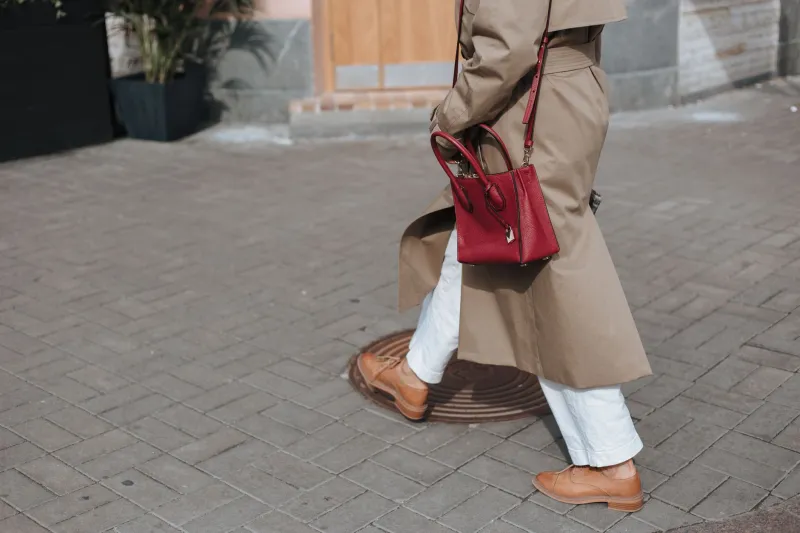
The lesson is not to avoid colour. It is to separate the shades that carry their own weight from the ones that need a whole outfit, a specific mood and a very particular light to work. A tomato red bag in a matte, slightly grained leather can look like a considered choice for years. The same red in high-shine patent can look like a missed train to 2026. Same colour, different future.
Why British daylight is the toughest critic
Shop lighting is designed to flatter. It warms the leather, softens the undertone and makes almost everything look richer than it will on a drizzly Tuesday at a bus stop. British daylight is less polite. It is grey, low and often damp, and it has a habit of revealing whether a shade has a solid base or just a fashionable surface.
Before you commit, take the bag to a window or, better, outside the shop. Look at it away from the display. A colour that survives a north-facing kitchen, a tube carriage and a November afternoon is a colour with a future. A colour that only works under warm spotlights is a colour you will fall out with by March.
Leather finish changes the colour
The same dye reads differently on matte leather, pebbled leather, patent, suede and smooth calf. This is where the five-year question really begins. Matte and lightly grained finishes tend to absorb light and wear more gracefully. They show a patina rather than a glare. Pebbled leather hides scuffs and rain marks, which matters in a country where the forecast is rarely a promise.
Patent is the tricky one. It amplifies colour, which can be wonderful in a very dark shade and less forgiving in a bright one. It also shows every fingerprint and can look dated faster than a matte finish. Suede in a pale colour is beautiful for about three wears and then becomes a weather report.
Hardware matters too. A gold-tone chain can warm a colour and make it feel classic, but only if you actually wear gold. A shiny silver clasp can look crisp on navy and cold on cream. Brushed brass ages well; very bright, very shiny hardware can date a bag as quickly as the shade itself. Look at the hardware as part of the colour, not an afterthought.
The five-year colour test
This is the practical bit. Run these checks before you spend, especially in the £150–£300 bracket where a mistake is annoying but not catastrophic.
The doorway test. Take the bag into natural light. Not the shop window, not the mirror by the till. Outside, or by a real window. Look at the colour against the street, not against the display.
The three-coat test. Think of the three coats you actually wear in November — probably a dark wool, a camel or stone trench, and something navy or black. Does the bag work with all three, or does it need one specific outfit to make sense? A bag that only works with one coat is a bag that will sit in its dust bag.
The hardware test. Look at the jewellery you reach for without thinking. If you never wear gold, a gold-chain bag may feel like fancy dress by the second winter. If you live in silver, a bright gold clasp will always look borrowed.
The corner test. Run your thumb over the finish and imagine the corners after two years of bus seats and café floors. Will scuffs read as patina or damage? Matte, grained leather is usually the safer bet. Patent and pale suede are not.
The 2031 test. Ignore the outfit you are wearing today. Imagine the bag with a coat you will still own in five years. If the answer is a very specific trend silhouette, it is probably a borrowed colour, not a committed one.
Shades worth the commitment
If you want one bag to carry you through several winters, these are the shades that tend to keep their nerve: true black in a matte or pebbled finish; cognac tan that will darken and patina; dark chocolate brown, which is having a moment in 2026 but has been quietly classic for decades; navy, which is softer than black and ages beautifully; oxblood or burgundy, which returns often enough to feel like a signature rather than a trend; and a muted olive or khaki, provided it is not too military.
Stone, putty and greige can work, but only in a finish that can take a mark. Cream patent is a beautiful idea and a difficult reality.
Trend colours better borrowed than bought
Butter yellow, tomato red, sage, cobalt, lilac and metallic silver are all excellent in small doses. Borrow them through a strap, a card holder, a scarf or a very small crossbody. A £20 strap can scratch the itch. A £250 bag in a shade that peaks for one season is a more expensive way to learn the same lesson.
The five-year colour test is not about being boring. It is about buying the light, not the season. Choose a shade that looks right in British daylight, with the hardware you actually wear, in the finish that will age with you. Then spend the rest of your budget on the things that make a bag last: good stitching, a strap that sits properly and a lining that does not tear in the first year.