The 3pm Rule: How to Tell If a Handbag Will Still Love You in Winter Light
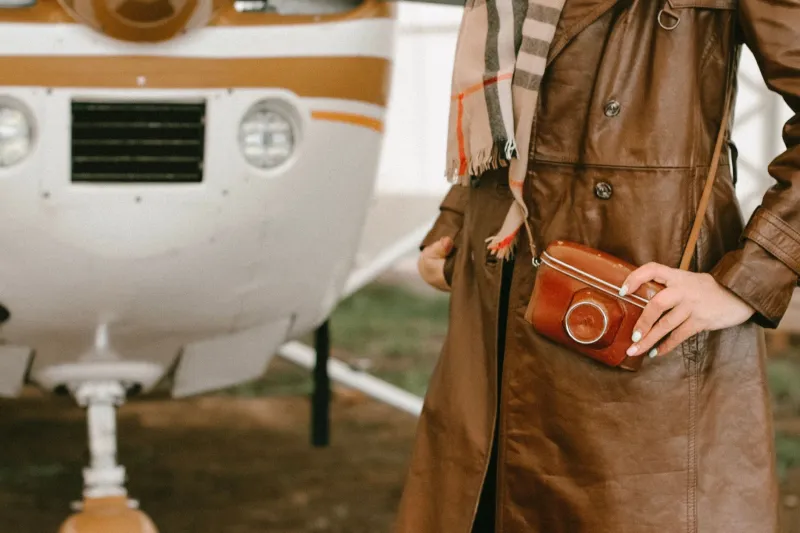
There is a particular kind of regret that arrives at about ten past three on a November afternoon. You bought the bag. You loved the bag. And then you carried it out of the shop, past the window display that had been gently gilding it for the last half hour, and watched it turn slightly grey under a sky the colour of a dishcloth.
In London today the sun clocks off around quarter past four. By the middle of December it's closer to ten to four. Which means that for the next four months, almost every handbag you own — or are about to own — will spend most of its public life being seen in conditions it was never designed for: flat white office tubes, orange sodium side streets, the amber glow of a pub that makes everyone look like they've been on holiday.
So here's a small, useful discipline. I call it the 3pm rule.
Why winter light is such a convincing liar
Shop lighting is built to sell. Warm spotlights add depth to leather, ring lighting flatters hardware, and a well-lit display cabinet can make a £90 bag look like it cost three times that. None of this is dishonest — it's just not the light you live in.
British winter daylight, by contrast, is cool, low and oddly blue. It drains warmth out of tan and camel, flattens the shine on patent, and turns certain shades of grey into something perilously close to office furniture. Deep burgundy, which looks rich and expensive at 11am, can read almost black by mid-afternoon. Pale ivory that seems fresh and expensive in a window becomes faintly tired once it's been rained on twice.
None of this means you shouldn't buy a winter bag. It means you should buy it at the time of day you'll actually be carrying it.
The 3pm test, in practice
Take the bag to a window. Not a shop window — a real one, ideally a door or a café pane facing the street. Hold it at hip height, roughly where it will sit when you're wearing it, and look at it in daylight rather than downlighting.
Then do three things:
- Look at it from two metres away. This is the distance other people see you from. Most bag decisions are made at forty centimetres, which is a distance at which nobody in Britain has ever admired your handbag.
- Look at it beside your coat. If you're wearing navy wool, the bag is being judged against navy wool. Bring the coat. This is not excessive; it's the whole point.
- Look at it in a shadow. Step back from the window into the flatter part of the room. If the colour goes muddy or the leather looks plasticky here, that's what you'll see on the Central line at 8am.
If you're shopping online, do the window test anyway — but at home, at 3pm, with the parcel opened near a window and your coat on the back of a chair. If it fails, the returns window is your friend.
The phone camera check
Your phone is a better second opinion than the shop assistant, because it has no stake in the sale.
Photograph the bag in three places: a window with daylight, a room with a warm bulb, and a room with a cool white LED. Don't adjust anything. Then look at the three photos side by side and ask a simple question — does it look like the same bag?
If the answer is no, you've found a bag with a narrow personality. That's fine if you bought it for one specific outfit. It's less fine if you want it to do Monday to Sunday.
One small technical note: phone cameras auto-correct white balance quite aggressively, so they'll make your bag look more consistent than it really is. If a bag looks different across the three photos, the real-life shift is bigger than what you're seeing. Trust the exaggeration.
Reading leather and hardware in low light
Matte leather wins winter. Pebbled, grained or lightly brushed finishes hold their colour in flat light, whereas high-shine leathers lose their depth and start reflecting whatever's above them — usually a strip light. A glossy finish isn't wrong, it just needs more daylight than Britain is currently prepared to offer.
Hardware is the tell. Warm brass and antique gold bring life to a black or chocolate bag in dull conditions. Bright polished silver and chrome can sink into grey light and disappear entirely. Gunmetal sits somewhere pleasingly in the middle and looks expensive on almost anything. There's no rule here, only observation: hold the bag near a window and see whether the metal still has something to say.
Colours that hold up after three o'clock
Very generally — and every bag is different:
- Chocolate brown, oxblood, forest and deep olive stay rich and warm when the light drops.
- True black is safe but slightly flat; texture does more work than colour.
- Camel and tan can go pale and washed unless the leather has some depth to it.
- Grey is the riskiest of the neutrals — check it against your coat, not against the shop wall.
- Ivory and cream look beautiful and will be rained on. Budget for that emotionally.
If you've already bought it
Almost everything can be rescued. Swap a bright silver chain for a brass one and the whole bag warms up. Add a scarf in a colour that lifts the leather. Wear it against a coat that gives it contrast rather than camouflage. And if it only works in one light — own that. A bag that's beautiful in candlelight is not a failure; it's a bag with a shift pattern.
The trick is knowing which one you've bought before you get it home. Three o'clock, by a window, coat on. That's the whole test.