Beyond the Price Tag: What £150–£400 Handbags Really Deliver in Winter 2026
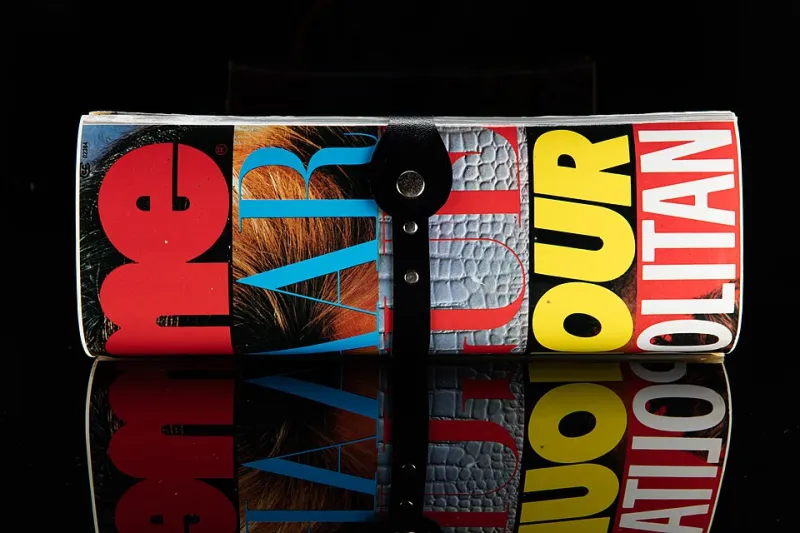
Photo: Auckland Museum Collections from Auckland, Aotearoa New Zealand, CC BY 2.0, via Wikimedia Commons
At Marcela's Purse, we treat the £250 handbag as a serious test case. It is the point where a bag stops being an emergency purchase and starts being a considered one — but it is also where marketing language gets thickest. So for winter 2026, we looked at the £150–£400 bracket as a UK shopper would: on wet pavements, under wool coats, on packed trains and in Christmas crowds. What does accessible luxury actually buy you now?
The bracket, plainly
In late 2026, £150–£400 is a crowded, confusing place. It includes high-street labels that have quietly nudged their prices up, independent makers selling direct, and mid-market brands with generous marketing budgets. The number on the tag tells you very little on its own. The useful question is what has been spent on the bag itself — the leather, the lining, the zip, the hardware, the time at the bench — and what has been spent on the box, the campaign and the shop fit.
Leather: what you can reasonably expect
At £250, you should be able to expect a decent top-grain leather, a well-finished corrected grain, or — from a small maker selling direct — a modest full-grain. Full-grain is not automatically better for every wearer: it is more natural, more variable and often more prone to marking. Top-grain is more uniform and can be a sensible choice for a daily bag. Bonded leather, which is shredded leather fibre glued together, is the one to treat cautiously in this bracket; it can crack and peel, especially in damp weather.
The finish matters as much as the grade. Pebbled leather hides scuffs well. Saffiano-style textures shrug off light rain. Smooth leather looks smarter but shows water marks. Suede is lovely and entirely wrong for a November commute unless you enjoy maintenance. None of these are deal-breakers; they are simply things to match to your actual life rather than your imagined one.
Linings, zips and the bits you touch
The lining is where many mid-range bags quietly save money. A cotton twill or a sturdy microfibre is fine. A thin, shiny polyester that snags on keys is not. Look inside: are the seams neat? Is the lining attached properly at the base? Is there a slip pocket that will actually hold a phone? These are unglamorous details, but they decide whether the bag feels pleasant in daily use.
Zips deserve special attention in the UK. A bag can have beautiful leather and still be undone by a cheap zip that sticks after a month of rain and grit. Metal teeth generally outlast plastic, and a covered zip or storm flap helps keep water out of the opening. Check the strap anchors too. The point where the strap meets the bag takes the most strain, especially if you carry a laptop or a water bottle.
Two makers on what £250 really covers
I spoke to two independent UK makers about the sums behind the price tag. Hannah Pryce, who runs a four-person workshop in Bristol, said: “At £250, I can use a proper top-grain leather, a cotton twill lining and solid brass hardware — but I can't do that with a wholesale margin and a big marketing budget. Something has to give.” Her point is not that expensive bags are bad value. It is that the route from workshop to wardrobe changes what is possible at a given price.
Ruth Kimani, who makes bags in Glasgow, put the emphasis on time. “The biggest cost is often the fiddly work — the edge finishing, the strap construction, the lining insertion,” she said. “If a brand is selling at £250 and claims full-grain, ask where it is made and whether the edges are painted or burnished. Those answers tell you more than the word ‘luxury’ on the website.” Both makers agreed on one thing: a repair-friendly bag is worth more than a perfect-looking one that cannot be mended.
The cost-per-wear sum — and its limits
Cost per wear is a useful reality check, not a personality test. Take a £250 bag worn three times a week from October to March — roughly 78 outings. That is about £3.20 per wear in year one. If it survives three winters, the same bag works out at around £1.07 per wear. A £90 bag that loses a strap in February after 40 wears costs £2.25 per wear, and that is before the inconvenience of replacing it.
The maths only works if you actually wear the bag. A £300 statement piece worn twice a month is not better value than a £120 everyday bag worn four times a week. It is also worth adding repairs into the calculation. A £12 zip replacement or a £20 strap repair can extend a good bag by years; the same repair on a bag with weak leather is money down the drain.
Details that earn their keep
In this bracket, I would happily pay for: leather that feels supple without being floppy; clean edge finishing; strong stitching at stress points; a lining that does not snag; solid or well-plated hardware; a zip that runs smoothly; adjustable straps with proper buckles; and a design that lets a cobbler replace the strap or zip. Those are the things that make a bag survive a British winter and still look presentable at a Christmas lunch.
The marketing you can ignore
“Italian leather” is not a quality guarantee; it describes a place, not a grade. “Luxury lining” usually means nothing specific. “Handcrafted” can mean a person touched it once. Dust bags, rigid boxes and tissue paper are nice, but they are not worth £50. Nor is a prominent logo, unless that is genuinely the look you want. None of this is scandalous — it is just packaging. Spend your money on the parts that touch the pavement and your hands.
The verdict
At £150–£400, a handbag can be genuinely excellent in 2026. It can also be mediocre with good photography. The price does not guarantee quality, but it does buy you the right to ask better questions. Check the leather grade, inspect the lining, test the zip, look at the strap anchors and ask about repairs. If the answers are vague, the details probably are too. If they are specific, a £250 bag can be one of the most sensible purchases in your wardrobe — no marketing required.